
Logistics Operations • 24/7 Frontline Energy

High-Speed Sortation Lines,
Hot Meals Ready Around the Clock.

Tailored for sprawling distribution hubs and transit corridors. Reduce delivery delays and dock safety risks with automated, heated-to-order meals positioned close to warehouse break areas.

Operational Realities

Logistics Shift Realities ➔ Automated 24/7 Nourishment

Warehouse Shift MealsFulfillment Hub Amenities24/7 Hot Food Station

Suburban Food Deserts & Graveyard Shift Blackouts

Hubs near highway interchanges may be miles from hot food, leaving late-night teams with limited meal choices.

Loading Dock Safety Liabilities & Delivery Friction

Outside couriers should not enter active forklift zones or trailer yards. Perimeter pickup can consume scheduled breaks.

Heavy Physical Labor Demands Hearty Fuel

Long package-handling shifts call for satisfying bowls, chili, and practical protein-forward handhelds.

Peak Season Headcount Surges Cause Waste or Shortages

Holiday and promotional peaks make pre-ordered catering difficult to forecast. On-demand heating is designed to reduce spoilage and stockouts.
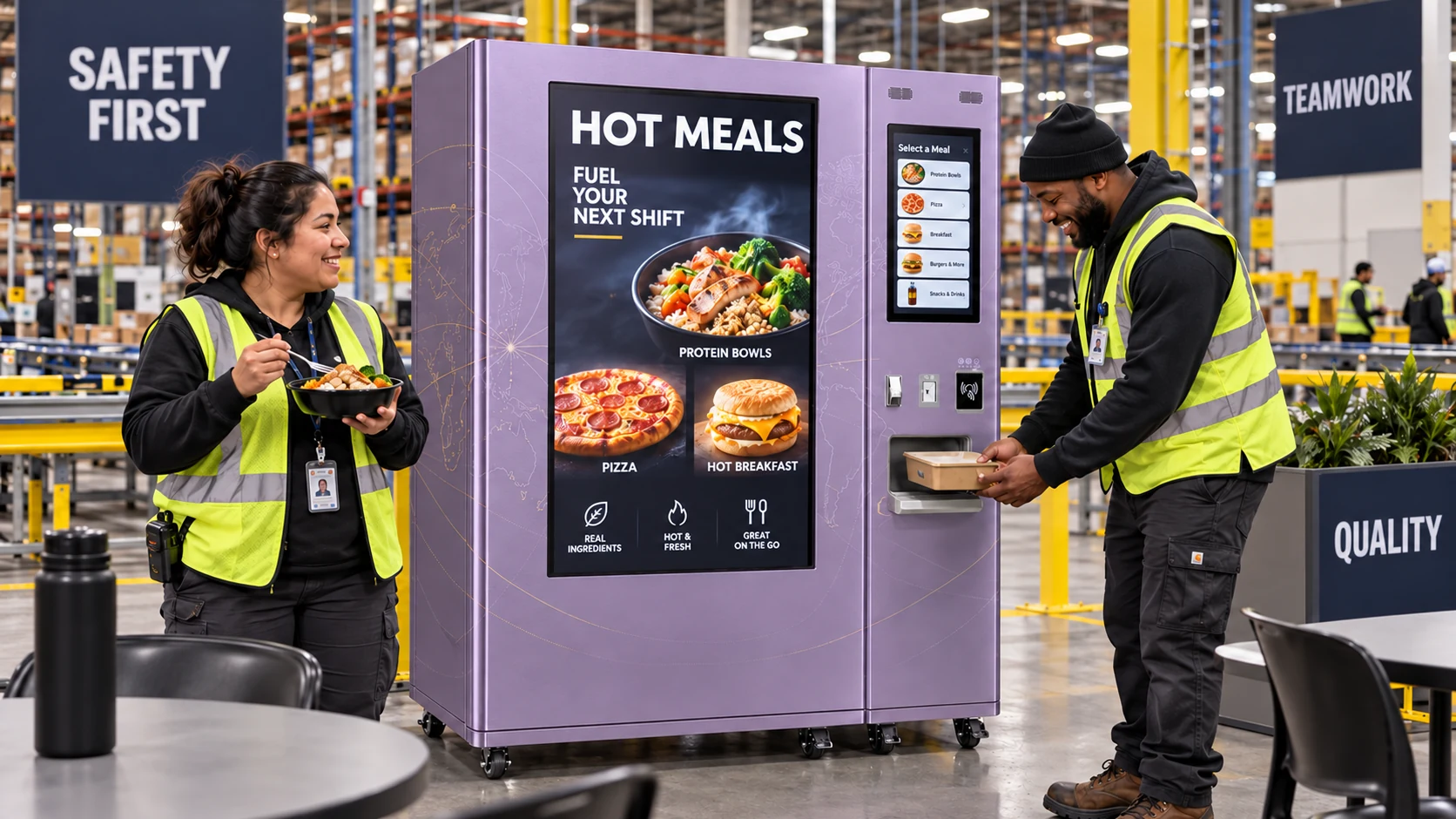
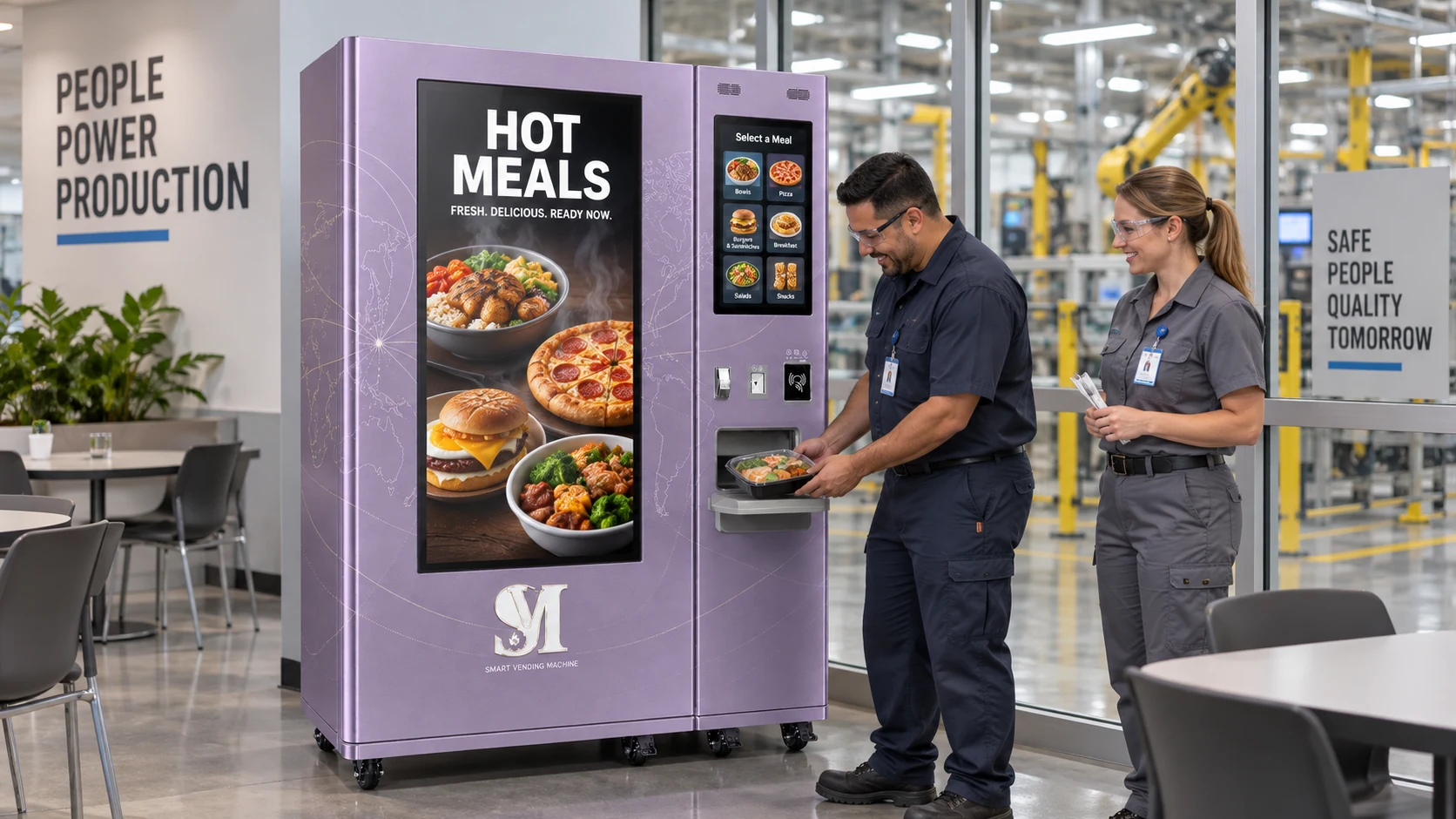
Diverse warehouse workers enjoying hot meals from an SVM station in a clean logistics break facility
Fueling the Frontline

Hot, Restorative Dining Inside the Secure Logistics Perimeter.

The station is planned for an approximately 12 sq. ft. footprint and dedicated single-phase power. Its enclosed electric reheating approach can be reviewed for approved warehouse break areas without open-flame cooking or external grease exhaust.

  • Peak Season Scalability: Frozen storage and dynamic heating support flexible inventory planning during demand surges.
  • Dock-Safe Proximity: Place stations inside designated break annexes, away from active truck aprons.
  • Badge & Digital Pay Planning: Evaluate RFID subsidies, overtime credits, mobile wallets, and cards with site systems.
  • Managed Restocking Options: Define telemetry, route delivery, and scheduled sanitization in the service plan.

Facility deployment guidance. Specifications are subject to site electrical review and final commercial service terms.

View Machine Engineering Specs
Demographic Mapping

Who Uses the Station, and When Is It Needed Most?

Map meal planning around package-sort windows, inbound truck arrivals, and rotating shift breaks.

Target Workforce
  • Package handlers & sortation teams
  • Forklift operators & inventory clerks
  • Long-haul & regional freight drivers
  • Yard marshals, safety & maintenance technicians
Critical Dining Windows
  • Day, twilight, and overnight shift changes
  • Midnight sortation breaks (11 PM – 4 AM)
  • Driver layovers and delayed loading windows
  • Holiday rush periods and promotional peaks
Planning Direction

Recommended Logistics Facility Guidelines.

Coordinate station placement with break schedules, safety routes, menu needs, and workforce benefit rules.

  • Analyze shift schedules around planned 15-to-30-minute breaks.
  • Locate stations inside break hubs or driver lounges away from heavy equipment avenues.
  • Plan high-protein, energy-dense bowls, wraps, macaroni dishes, and breakfast burritos.
  • Configure badge subsidies or department-sponsored vouchers only after integration review.
Facility Feasibility

Logistics Feasibility Checklist Before Deployment.

Confirm movement routes, secure delivery access, utilities, and employee benefit policies.

  • Review footpaths between packing areas and designated break spaces.
  • Establish security dock access and courier badging protocols.
  • Confirm 208V/240V 30A single-phase power and cellular reception.
  • Align shift subsidy policies, overtime allowances, and menu rotations.
Placement Ideas

High-Impact Warehouse Placement Zones.

Main Warehouse Breakroom
(24/7 central dining hub)
Inbound / Outbound Driver Lounges
Mezzanine Sortation Rest Areas
Facility & Equipment Maintenance Hubs

Needs Assessment

Review shift hours, seasonal counts, and dining dead zones.

Site Feasibility

Inspect electrical drops, clearances, and network signal.

SLA & Terms

Confirm menu rotation, subsidy logic, and replenishment cadence.

Launch & Refine

Use reviewed telemetry to tune inventory during peak operations.

Next Step

Start With 4 Core Logistics Data Points.

Hub location, average shift headcounts, operating schedule, and current off-hour dining options provide a practical start for site planning.

Keep your sortation workforce fueled 24/7
without the overhead of a staffed kitchen.

Schedule an on-site feasibility walkthrough with our commercial dining team.

Request a Facility Assessment →