
Campus Life Enhancement • 24/7 Student Dining

Late-Night Study Sprints,
Hot Meals Right Inside the Dorm.

Purpose-built for modern university campuses, student housing, and collegiate research hubs. Bridge dining hall blackouts and reduce midnight delivery friction with automated, heated-to-order meals inside residence halls.

Student Life Realities

Campus Dining Realities ➔ Automated 24/7 Amenities

Late-Night Campus DiningResidence Hall AmenitiesCampus One-Card Station

Dining Halls Close Early; Students Stay Up Late

Night-owl students, researchers, and study groups need better options after standard dining hall hours.

Late-Night Delivery Risks & Dorm Access Friction

Off-campus pickup can raise safety concerns, while delivery drivers cannot enter secured residence halls.

Residence Hall Cooking Restrictions

Many residence halls limit open hot plates and high-wattage appliances. Enclosed, ventless electric heating can be evaluated with campus safety teams.

Limited Culinary Labor & Sanitation Capacity

Automated stations can supplement existing teams when restocking, monitoring, and sanitation roles are clearly defined.
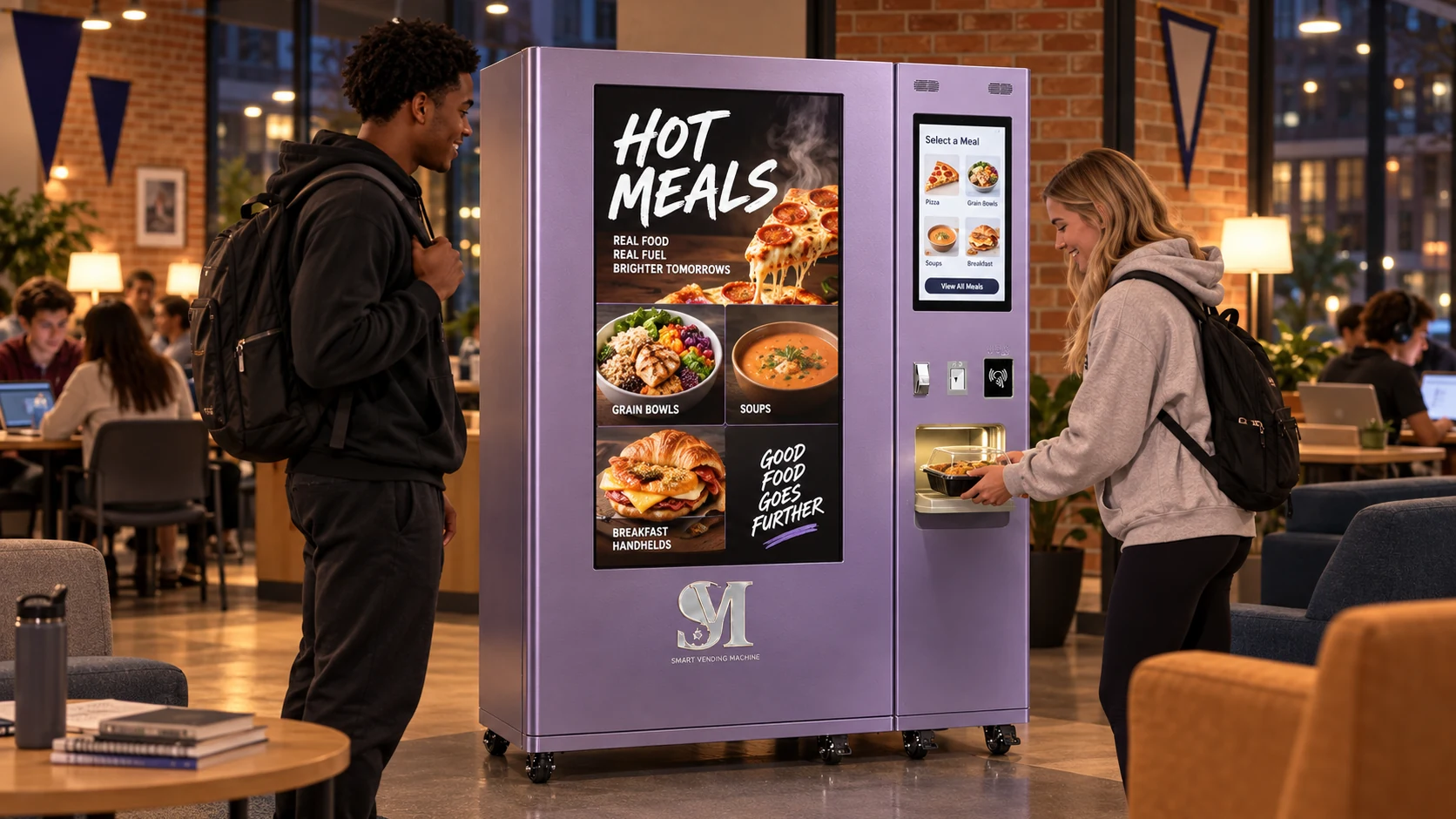
Diverse university students holding warm meals beside an SVM station in a residence hall commons
Fueling Student Success

Reliable Late-Night Hot Meals Along Campus Footpaths.

Planned for an approximately 12 sq. ft. footprint and dedicated building power, the station uses enclosed, ventless, fully electric heating and requires campus-specific safety review.

  • Campus One-Card & Dining Dollars: Evaluate student IDs, meal-plan points, mobile wallets, and debit cards with auxiliary systems.
  • Interior Placement Planning: Consider residence commons, student unions, or library study areas.
  • Facility Safety Review: Ventless electric heating avoids grease traps and commercial hoods; final approvals remain campus-specific.
  • Managed Replenishment Options: Define inventory, delivery, and sanitation responsibilities in the service agreement.

Collegiate deployment guidance. Specifications are subject to site electrical review and final campus auxiliary service agreements.

View Machine Engineering Specs
Demographic Mapping

Who Uses the Station, and When Is It Needed Most?

Map meal planning around academic cycles, library rushes, and residence schedules.

Target Campus Demographics
  • Undergraduate & graduate residential students
  • Late-night study groups & researchers
  • Campus police, facilities & custodial night staff
  • Student-athletes returning from games or travel
Critical Dining Windows
  • Post-dining hall closing (9 PM – 4 AM)
  • Midterm & final exam periods
  • Weekend dining lulls
  • Academic holidays and breaks
Planning Direction

Recommended Collegiate Facility Guidelines.

Coordinate student movement, accessibility, menu planning, and auxiliary services before deployment.

  • Map residential density and library study hours around night transit hubs.
  • Locate stations in approved keycard spaces without blocking egress or accessible paths.
  • Curate flatbreads, macaroni bowls, breakfast melts, and comfort meals.
  • Coordinate Dining Dollars and student account processing with campus auxiliary teams.
Facility Feasibility

Campus Feasibility Checklist Before Deployment.

Review student routes, delivery access, utilities, and dining-plan requirements before installation.

  • Review residence pedestrian paths and library accessibility.
  • Establish card credentialing and dock clearance for replenishment personnel.
  • Confirm 208V/240V 30A single-phase power and data connectivity.
  • Coordinate meal-plan structures, dietary preferences, and academic calendars.
Placement Ideas

High-Impact Campus Placement Zones.

Residence Hall Common Lounges
(Safe late-night access)
24/7 University Library Study Hubs
Student Union Concourse
Athletic Facilities & Fieldhouse Lounges

Needs Assessment

Review dorm capacity, dining schedules, and after-hours gaps.

Site Feasibility

Inspect power, doorway clearances, and network signal.

SLA & Terms

Finalize menu curation, payment integration, and replenishment.

Launch & Refine

Review student traffic data to tune menu rotation.

Next Step

Start With 4 Basic Campus Data Points.

Campus location, target building, student density, and current off-hour dining setup provide the basis for a collegiate deployment model.

Support student dining access after hours
without extending dining hall operations.

Schedule an on-campus feasibility walkthrough with our higher education dining team.

Request a Facility Assessment →